
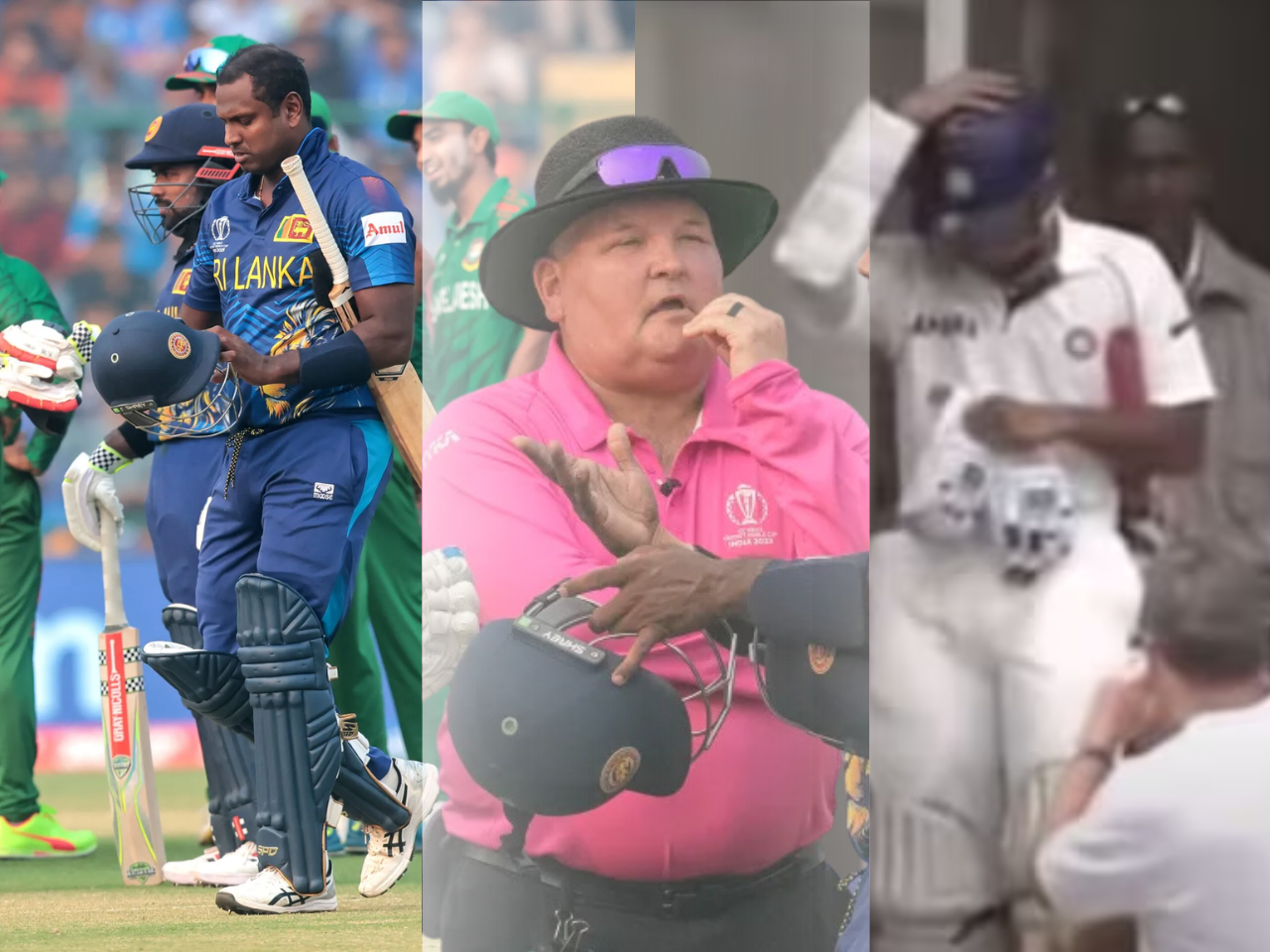
In international cricket, Angelo Mathews became the first batter ever to be timed out. This unusual dismissal shocked fans and sparked debate worldwide. The CyberWolf takes a deep dive into past timed-out incidents in first-class cricket, the laws behind them, and the dramatic stories of Ganguly, Laxman, and Tendulkar.
What Does “Timed Out” Mean in Cricket?
According to the MCC Laws of Cricket, Law 40.1.1 states:
When a wicket falls or a batter retires, the next batter must be ready to receive the next ball within two minutes. If this condition is not met, the incoming batter is declared “timed out.”
This rule was first introduced in the 1980 Code of Laws. Since then, it has been a rare but important regulation. Interestingly, the 2000 revision increased the limit from two minutes to three. However, the 2023 ICC World Cup regulations reinstated the two-minute rule, which directly led to Mathews’ dismissal.
The First-Ever Timed-Out Incident in Cricket
So, who was the first cricketer ever to be timed out? Let’s look back.
- Andrew Jordan (South Africa, 1987):
Jordan, playing for Eastern Province, was declared timed out in a domestic match against Transvaal. Since heavy floods blocked the roads, he couldn’t reach the ground in time. Therefore, he became the first official batsman to be timed out in cricket history. - Harold Heygate (England, 1919):
Sussex, short of players, convinced Heygate, a war veteran with rheumatism, to join. However, he failed to reach the crease within the required time and was controversially dismissed. As a result, this incident became one of the earliest reminders of the strictness of the law.
Both cases show how external circumstances can unexpectedly lead to this rare dismissal.
Famous “Close Calls”: Laxman, Ganguly, and Tendulkar
Ganguly’s Race Against Time – Cape Town Test, 2007
During a Test against South Africa in Cape Town, Sourav Ganguly was nearly timed out. Since Sachin Tendulkar was restricted due to time spent off the field, VVS Laxman was next in line. Unfortunately, Laxman was in the shower at that critical moment.
Therefore, Ganguly rushed to change into his gear and sprinted to the crease. Umpire Daryl Harper explained the situation to Graeme Smith, who graciously allowed Ganguly to continue. Consequently, he went on to score 46 runs. Nevertheless, India still lost the match.
This incident is remembered as one of cricket’s closest brushes with the timed-out law.
Angelo Mathews’ Historic Dismissal – 2023 World Cup
In the 25th over of Sri Lanka’s innings against Bangladesh, Angelo Mathews walked in after Sadeera Samarawickrama’s dismissal. Although he reached the crease within two minutes, he kept adjusting his helmet strap and wasn’t ready to face the ball.
Bangladesh captain Shakib Al Hasan appealed, and umpire Marais Erasmus ruled Mathews timed out at 3:54 pm, just five minutes after Samarawickrama’s dismissal.
Mathews argued, citing a genuine equipment issue, but the decision stood. Furious, he threw his helmet near the boundary line, marking a historic yet controversial moment in cricket.

Why Mathews’ Timed Out Dismissal Matters
- It was the first timed-out dismissal in international cricket history.
- The incident raised debates on sportsmanship vs. strict law enforcement.
- It reminded fans of forgotten cricket laws and unusual dismissals.

Final Thoughts
Cricket is known for its unique laws, but few dismissals attract as much attention as a timed out. From Andrew Jordan in 1987 to Angelo Mathews in 2023, this rare event continues to fascinate fans.
Will future batters learn from Mathews’ fate? Only time will tell.
Click here to see more related sports news.