
Introduction
Introduction
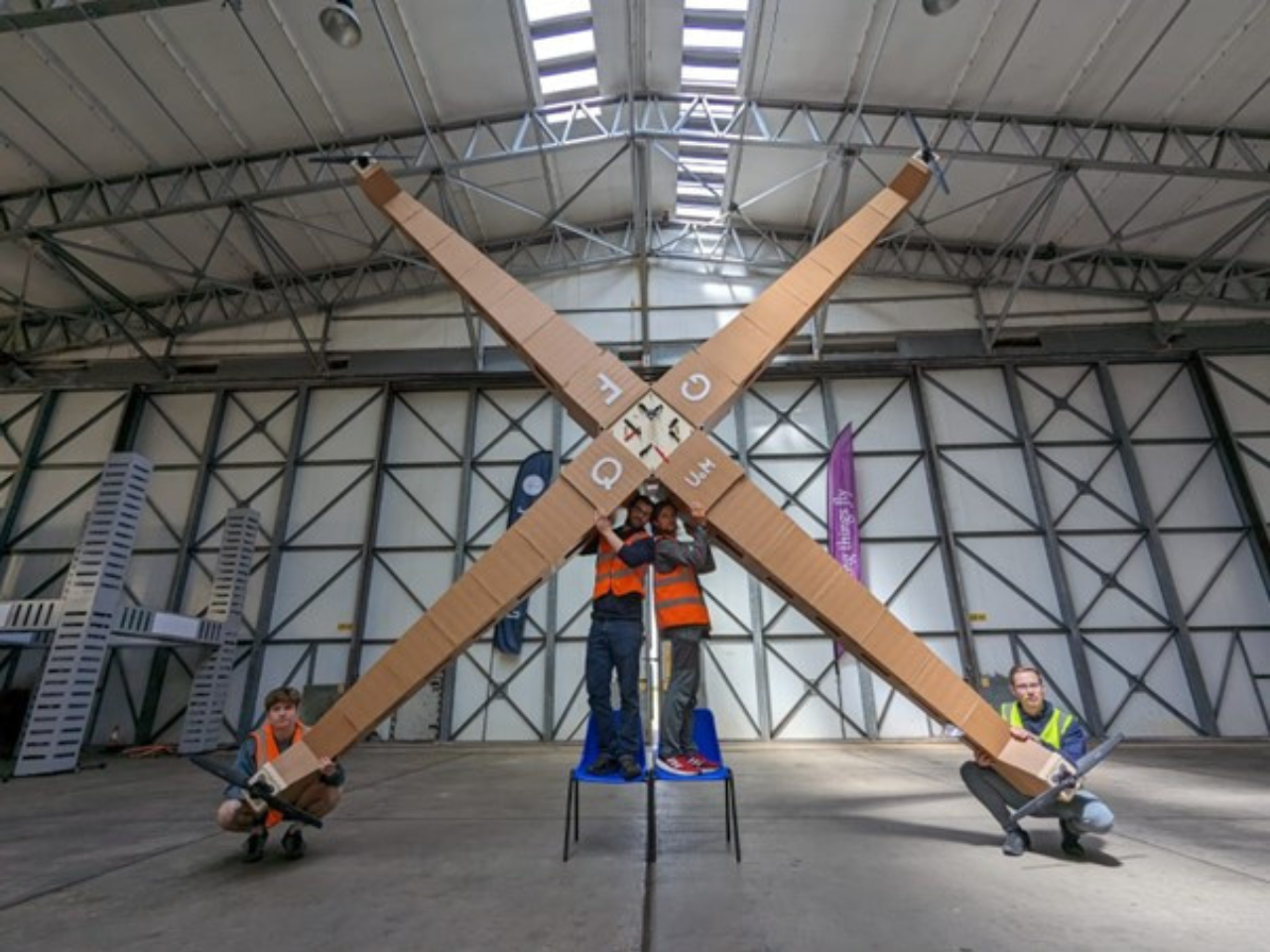
The world of drone technology has recently achieved an extraordinary milestone. Engineers from the University of Manchester have successfully built the largest unmanned quadcopter in the world using only foamboard. At 21 feet (6.4 meters) across, this project highlights the potential of low-cost materials in aviation. Moreover, it shows how creativity and resourcefulness can lead to groundbreaking results.
The Giant Foamboard Quadcopter (GFQ)
Nicknamed the Giant Foamboard Quadcopter (GFQ), this drone is powered by four electric motors capable of lifting up to 55 lbs (25 kg). In addition, advanced GPS systems and in-built sensors allow it to fly autonomously. Therefore, the GFQ is not just an experiment; it is proof that affordable engineering can achieve high-level performance.
Why Foamboard?
Foamboard, made from layers of foam pressed between sheets of paper, is known for being lightweight, strong, and inexpensive. Because of these qualities, it is the perfect choice for drones. Consequently, engineers can now test large-scale aircraft without the heavy financial burden of expensive materials.
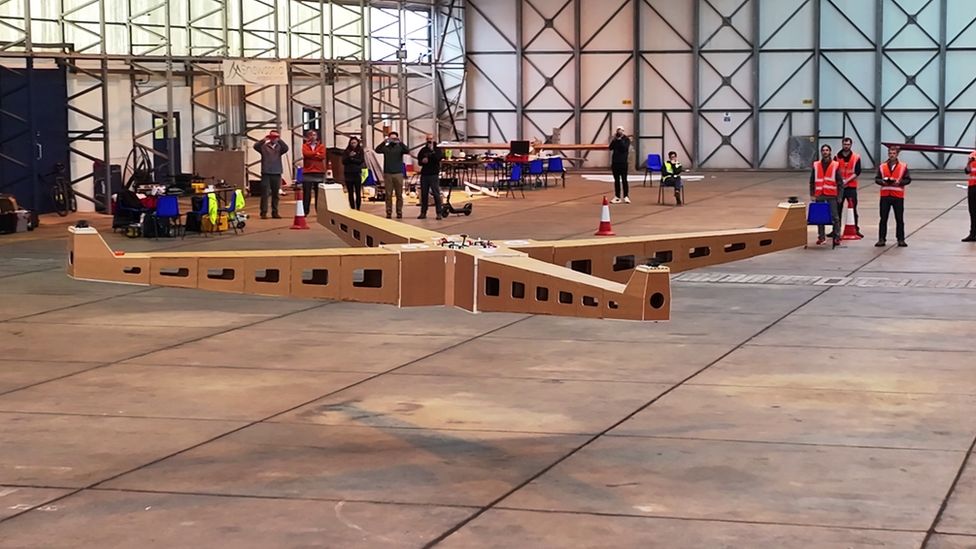 IMAGE SOURCE,MANCHESTER UNIVERSITY
Successful First Flight
In July 2023, the GFQ completed its inaugural flight at the Snowdonia Aerospace Centre in Wales. During the flight, the drone displayed remarkable stability and maneuverability. As a result, researchers confirmed that low-cost design can still deliver high reliability. Furthermore, the test proved that foamboard can endure demanding flight conditions.
Future Applications
Looking ahead, the Manchester team plans to scale up the quadcopter to even larger sizes. Additionally, they are investigating how foamboard could be used for fixed-wing drones and even small crewed aircraft. If successful, this research could transform commercial aviation, defense systems, and logistics operations.

Beyond Academia: Cardboard Drones in Action
Foamboard and cardboard drones are not limited to research labs. In March 2023, the Ukrainian company SYPAQ began deploying cardboard fixed-wing drones supplied from Australia. These drones can deliver medical supplies, blood, and other payloads. Interestingly, they are less detectable by radar, making them highly suitable for conflict zones.
Reports suggest that some units have been modified by Ukrainian soldiers to carry weapons. However, the company has not confirmed these claims.
Conclusion
The largest foamboard quadcopter ever built is more than just an engineering feat—it is a symbol of innovation and affordability in aerospace. From academic research to real-world applications, drones built from inexpensive materials are opening new doors in aviation, logistics, and defense.
See more related tech news on cyberwolf.